


7 Signs That Acne Is Healing - What To Look For
7 Signs That Acne Is Healing
Acne affects far more adults than most people realise. For many, it becomes a long and frustrating journey — trying different products, adjusting routines, and never quite being certain whether things are improving or simply going through a quiet phase.
Knowing that your treatment is actually working is more important than people give it credit for. It gives you the confidence to stay consistent, the perspective to avoid over-treating, and the clarity to recognise when it might be time to seek a clinical opinion.
As an ARA Accredited Acne Treatment Centre, we see the full spectrum of acne presentations at Mulberry House — from mild congestion to persistent cystic acne that has resisted years of treatment. One of the most common questions we hear is simply: how do I know if this is getting better?
Here are seven signs to look for.
1. Larger cysts and pustules begin to crust over
Cysts are the deeper, more painful lesions — pus-filled and often quite prominent. Pustules are smaller, with the characteristic red surround and white centre. When either of these start to crust over and dry out rather than continuing to enlarge or rupture, it is a meaningful sign. It indicates that the inflammatory process is resolving and your skin's natural healing response is taking over.
2. Nodules retreat
Acne nodules sit beneath the skin surface. There may be no visible 'spot' as such, but the skin feels lumpy, tender, and uneven to the touch. These are often the last to form and the last to go. When you notice nodules becoming less defined and less painful, that is one of the more encouraging indicators that deeper inflammation is settling.
3. Redness begins to calm
Active acne produces a visible inflammatory response — the skin becomes red, reactive, and often warm to touch. As healing progresses, that redness should begin to normalise. The skin tone becomes more even and the general appearance less angry. This can happen gradually, so it is worth comparing photographs taken a few weeks apart rather than relying on day-to-day observation.
4. Fewer new spots are appearing
Acne healing is rarely linear. As some spots resolve, new ones can still appear, and this can feel disheartening when you are mid-treatment. What matters is the overall trajectory — a gradual reduction in the frequency of new breakouts over a period of weeks. The rate of new spots appearing is one of the clearest indicators of whether your treatment is gaining control of the condition.
5. The spots that do appear are less severe
Alongside frequency, look at intensity. As acne responds to treatment, the spots that do still appear tend to be smaller, less inflamed, and less painful than before. A shift from cysts and nodules toward smaller, more superficial blemishes is a real sign of progress — even if the skin still doesn't feel completely clear.
6. Skin appears less oily
Excess sebum production is one of the root causes of acne. When the skin produces too much oil, pores become blocked and the conditions for bacterial growth are created. As treatment takes effect — whether through prescription skincare, clinical treatment, or a combination — sebum production often becomes more balanced. Skin that appears less shiny and feels less congested is moving in the right direction.
One important note: some acne products are highly drying. If skin becomes excessively tight or flaky, that can actually trigger a compensatory increase in sebum production. If you are finding your skin very dry, it is worth reviewing the products you are using.
7. Blackheads and whiteheads are reducing
Blackheads and whiteheads — comedones — are the precursors to active spots. They form when pores become blocked with sebum and dead skin cells. A reduction in the number of comedones is therefore a forward-looking sign: fewer blocked pores today means fewer spots in the coming weeks. It is one of the earlier and more encouraging signals that your treatment is working at a preventative level.
What to do if your acne is not healing
Acne can be a persistent condition and, without guidance, it is not always straightforward to know whether what you are experiencing is genuine improvement, a temporary lull, or a condition that needs a different approach entirely.
If you have been managing acne yourself for several months without clear progress, it is worth seeking a clinical opinion. Your GP may be able to prescribe or refer you to a dermatologist — though waiting times can be long and referral criteria are often strict.
At Mulberry House, we offer consultations specifically for acne and acne-prone skin. As an ARA Accredited Acne Treatment Centre, we take acne seriously as a medical skin condition, not a cosmetic inconvenience.
What comes next — once acne is healing
When acne does begin to respond, many find there is a new question: what now? Active treatment is one thing, but the skin that emerges from a period of acne is often left with residual congestion, uneven texture, pigmentation, and sometimes scarring. This is where a considered clinical approach can make a significant difference.
Depending on what the skin needs, the options we tend to consider include:
Prescription skincare and ZO Skin Health Getting the daily skincare routine right is often the most important foundation. ZO Skin Health offers formulations specifically designed for acne-prone and post-acne skin — working to regulate sebum, support the skin barrier, and maintain clarity as conditions improve.
Chemical peels Clinical peels offer controlled exfoliation that helps clear residual congestion, smooth uneven texture, and reduce post-inflammatory pigmentation. They can be used as part of an ongoing management programme rather than as a one-off treatment.
Polynucleotides and skin boosters Once acne is well controlled, skin quality treatments such as polynucleotides (including Plenhyage XL) can be remarkably effective for restoring hydration, improving skin texture, and supporting the skin's own regeneration. This is a newer area of treatment that has genuinely expanded what is possible for post-acne skin.
Tixel — for acne scarring Where acne has left noticeable scarring, Tixel is one of the most effective options we offer. It is important to note that Tixel is not appropriate for active, inflamed acne — the treatment works best once the skin is stable and clear. Used at the right time, it can produce significant improvements in scarring and overall skin texture.
Mulberry House Clinic is an ARA Accredited Acne Treatment Centre, based in Great Addington, Northamptonshire. For further information or to arrange a consultation, call 01604 702 630 or email info@mulberryhouseclinic.co.uk.
Read more
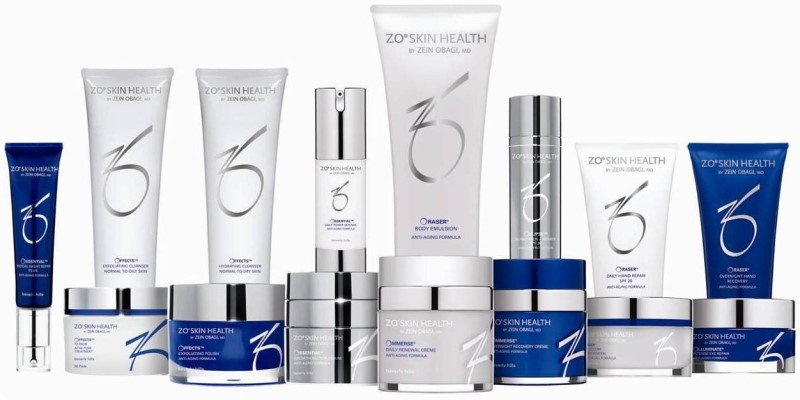
ZO Skin Health at Mulberry House For a long time, skincare enthusiasts faced a difficult choice: do you buy from a massive online retailer to save money, or do you visit a clinical expert for the...

April is Rosacea Awareness Month. As an ARA UK Accredited Treatment Centre, we explain what rosacea is, what triggers it, and how to manage it — including with the ZO Skin Health Redness Relief pro...